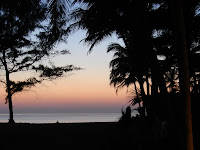
And so to Goa, home to some of India's finest beaches and the chance to team up with normality for a beer or 20!
After a gruelling 16 hour overnighter bus ride we pitched up at Agonda, the first of the seven beaches we frequented during our 10 day break here. First impressions couldn't have been better. A two-mile beach without so much as one living soul. Paradise! Here we quickly settled into our hut, the bamboo door of which opened onto soft white sand flanked by exotic palm trees that stretched as far as the eye could see.

Neighbouring Palolem - a 7km rickshaw ride away - offered much more in the way of nightlife and we soon got acquainted with some of the beaches most popular drinking holes! Christmas Day we dined in style on the beach - the King fish was bbq'd tandoor style and was arguably the finest fish I've ever tasted!
Boxing Day bought with it the arrival of Dukestar and Carrys, who we met in Margao and ventured to Colva Beach with. Here package tourism exists on a mass-scale and lobster red Brits line the, shitty, beach amid Domino Pizza cartons and freshly drained Kingfisher bottles. Mind you, the trip was worth it just to see our friend's look of amazement as countless Indians joined us in the taxi on our way back to Margao station!


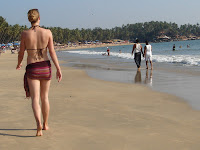
After several days exploring the southern beaches we packed up our packs and made the 120km trek north to team up with Luke and get a look at some of Goa's hippier beaches in the North. Beaches like Anjuna, home to the 60s hippy and drug boom, and Vagator were a welcome change from the slower paced south. Groovy markets, hip bars and beautiful bronze women!
Mind you, nothing can detract from the crowds of Indian tourists - perverts! They line the beach with one handing gripping their penis while the other directs a mobile phone at unsuspecting caucasian flesh. And if they're not directing their own testosterone-fuelled movie then they're frollicking about in the surf like a bunch of pre-pubescents how really should be at school!
New Years was a blinder. Euphoric from the cheap beer and some of Goa's finest herbs we partied until the wee hours amid the beautiful stars and refreshing waves. The fires burned and the fireworks exploded in the sky above as we danced our tits off to the hardcore beat that is Goan trance.
It's easy to see why these wannabe hippies get stuck on the golden beaches of Goa, but that lifestyle is not for us. After 10 days of little more than sunbathing and swimming in the warm Arabian Sea pastures new beckon - the archealogical delights of Hampi and then later the fiery curries of Chennai!


